How to Interpret Delta Gap Findings Through an Anion Gap Calculator
Delta gap interpretation is a hands-on way to expand the usefulness of an Anion Gap Calculator past a single value. Rather than ending with the anion gap, clinicians contrast the change in the anion gap with the change in bicarbonate to look for overlap, concealed abnormalities, and expected compensation. This approach makes the delta gap especially valuable in acid-base balance analysis, where one condition may hide another.
In a straightforward case, metabolic acidosis may present with a clearly elevated anion gap. But if the bicarbonate drop is larger or more limited than expected, the pattern may suggest a mixed acid-base disorder. The delta gap improves this interpretation by turning lab values into a diagnostic approach that supports pattern recognition, correction, and clinical significance.
To use it well, you need more than just a formula. You need to interpret what the numbers mean in the context of serum sodium, serum chloride, serum albumin, and the full electrolyte panel. You also need to know when the result points to high anion gap metabolic acidosis, when it suggests non-anion gap metabolic acidosis, and when a secondary process such as metabolic alkalosis is present in the background.
What Is the Delta Gap?
The anion gap is a derived measure used to gauge uncounted ions in the blood. It is often used in metabolic acidosis workups because it assists show whether the acidosis is caused by too much acid or by direct bicarbonate loss. The delta gap goes a step further by matching the rise in anion gap to the fall in bicarbonate.
In simple terms, the delta gap asks: if the anion gap has increased, has bicarbonate fallen by the amount we would expect? If not, there may be an additional acid-base disorder present. This is why delta gap analysis is part of a larger acid-base evaluation rather than a standalone diagnosis.
The concept is especially useful helpful in detecting overlap. For example, a patient with high anion gap metabolic acidosis may also have a concurrent non-anion gap metabolic acidosis from diarrhea or renal tubular dysfunction. Alternatively, a patient may have a high anion gap process plus metabolic alkalosis, which can blunt the expected bicarbonate decrease. The delta gap provides structure to that assessment.
One reason the delta gap matters is that the anion gap alone can miss key context. A normal-looking gap does not always mean the patient has a normal acid-base state, especially if serum albumin is low or if compensation is present. The delta gap adds a second layer of interpretation that improves diagnostic accuracy.
How to Work Out Delta Gap Step-by-Step
An Anion Gap Calculator is the fastest way to perform the first calculation, but following the steps is important for making sense of it. The process usually begins with the standard anion gap formula:
Anion gap = serum sodium − (serum chloride + bicarbonate)
Once the anion gap is calculated, compare it with the expected normal anion gap for that lab, then compare the change in gap with the change in bicarbonate. This is where the delta ratio comes in. In many clinical settings, the delta ratio is calculated as:
Delta ratio = (measured anion gap − normal anion gap) / (normal bicarbonate − measured bicarbonate)
This is a useful systematic framework for analysis:
- Obtain the basic electrolytes, including serum sodium, serum chloride, and bicarbonate.
- Use the anion gap calculator or the formula to determine the anion gap.
- Assess whether the anion gap is elevated relative to the lab’s normal range.
- Approximate how much bicarbonate has fallen.
- Compare the two changes to assess whether the pattern fits a pure disorder or a mixed process.
The idea is not only calculation but also interpretation. If the gap is elevated more than expected for the bicarbonate drop, another process may be raising bicarbonate, such as metabolic alkalosis. If the bicarbonate falls more than expected, another process such as non-anion gap metabolic acidosis may be present.
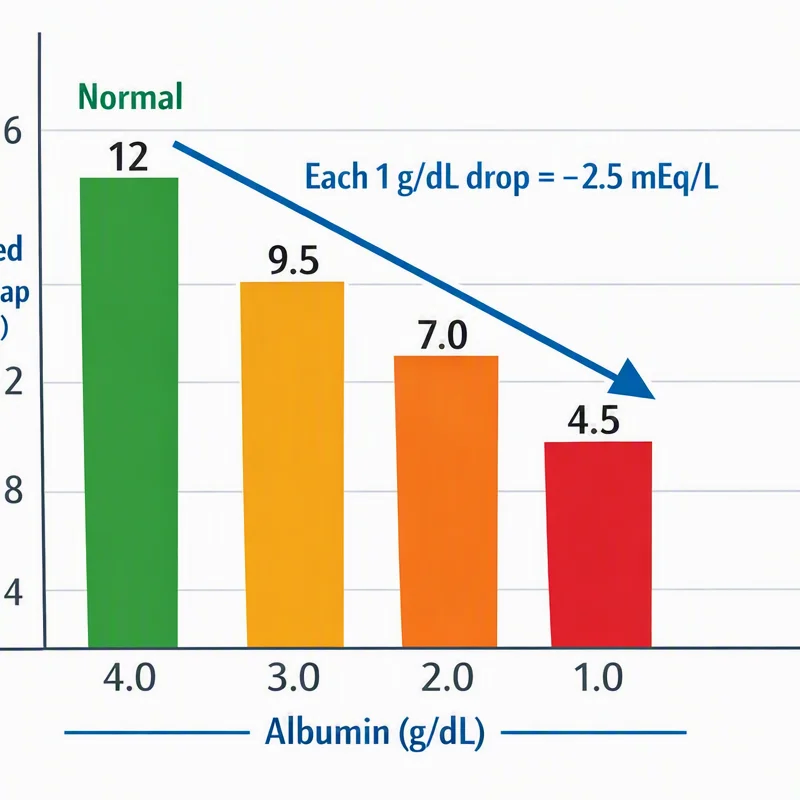
It is also important to consider serum albumin. Because albumin is a major unmeasured anion, hypoalbuminemia can lower the apparent anion gap. That means the corrected anion gap may be more accurate than the raw value, especially in critically ill patients or those with chronic disease.
What exactly a Typical Delta Gap Suggests
A expected delta gap often implies that the change in anion gap is matched by the change in bicarbonate. In a straightforward case, this points to a single acid-base disturbance, most commonly a isolated high anion gap metabolic acidosis. Yet, “normal” does not always mean simple; it means the numbers are behaving in a way that fits expectations.
For example, if a patient has metabolic acidosis with raised anion gap and the bicarbonate drop aligns with the rise in gap, the pattern may be consistent with a single primary process. In that situation, respiratory compensation should still be assessed with blood gas analysis, because the lungs may be lowering carbon dioxide properly in response to the acid load.
A normal delta gap can also aid in distinguishing a pure high-gap disorder from a mixed one. If the ratio is approximately as expected, you are less likely to have a simultaneous metabolic alkalosis or an added non-anion gap metabolic acidosis. That makes the pattern simpler to interpret and can streamline the diagnostic approach.
Still, a normal delta gap does not exclude all complexity. A patient with kidney disease, volume depletion, or abnormal albumin may still have multiple overlapping processes. The delta gap should be used as part of a wider evaluation, not as a replacement for clinical assessment.
How to Understand an Increased Delta Gap
An high delta gap, often reflected by a higher delta ratio, implies that the increase in anion gap is larger than the decrease in bicarbonate. Practically speaking, this typically means there is a separate process increasing bicarbonate or offsetting the expected acidemia. One common explanation is concurrent metabolic alkalosis.
This pattern is clinically important because it can hide the true degree of the primary disorder. A patient may appear to have only modest metabolic acidosis on paper, but the elevated delta gap uncovers an associated alkalinizing process. That overlap changes the interpretation and may affect management choices.
Common causes of a high delta ratio include:
- Metabolic alkalosis coexisting with a high-gap acidosis
- Lactic acidosis with simultaneous vomiting or diuretic effect
- Ketoacidosis with a coexisting contraction alkalosis
In lactic acidosis, tissue hypoperfusion or impaired oxygen delivery promotes acid generation. If the patient is also dehydrated, the bicarbonate reduction may be not as large as expected because of a separate alkalinizing process. The same can happen in ketoacidosis, where vomiting, poor intake, or prior treatment can create overlapping changes.
The practical message is that an elevated delta gap points to overlap. It is a clue that the acid-base picture is not explained by a single disorder. The best interpretation comes from combining the delta ratio with blood gas analysis, clinical context, and the rest of the electrolyte panel.
How to Understand a Low Delta Gap
A low delta gap suggests bicarbonate has fallen more than expected for the degree of anion gap elevation. This pattern indicates that the patient may have both a high-gap disorder and an additional non-anion gap metabolic acidosis. One of the most common causes is https://rentry.co/xmx4mdmh hyperchloremic acidosis.
Hyperchloremic acidosis often occurs when bicarbonate is lost and chloride goes up to maintain electroneutrality. This can happen with diarrhea, certain renal disorders, or after treatment of another metabolic disorder. The result is a decreased bicarbonate than the high-gap condition alone would predict.
Renal tubular acidosis is another key cause. In this setting, the kidneys are unable to handle acid and bicarbonate properly, producing a non-gap component that can coexist with another acid-base disorder. The delta gap helps expose that overlap.
Before deciding that the patient has a true mixed disorder, consider laboratory error. Pre-analytic issues, specimen contamination, or transcription mistakes can skew serum sodium, serum chloride, or bicarbonate values. If the result does not fit the clinical picture, repeating the labs is often the best assessment.
Serum albumin also matters here. Low albumin can make the measured anion gap appear smaller than it truly is. If hypoalbuminemia is present, you should consider correction for albumin before interpreting the delta gap. Without that step, a low or borderline result may be inaccurate.
Typical Clinical Scenarios and Errors
Several frequent states can confound delta gap interpretation. One important issue is toxic alcohol ingestion. Methanol, ethylene glycol, and similar compounds can lead to a profound high anion gap metabolic acidosis, but the first pattern may be hard to recognize without thorough analysis. The delta gap can reinforce suspicion of an additional process, but it should not take the place of targeted toxicology testing.
Salicylate toxicity is an additional classic pitfall. It can produce a mixed acid-base disorder, often mixing respiratory alkalosis with metabolic acidosis. Because the acid-base pattern is multifaceted, delta gap analysis should be interpreted alongside blood gas analysis and clinical context rather than used in isolation.
Chronic kidney disease can also influence results. Reduced renal acid excretion can cause metabolic acidosis, while retained unmeasured anions may raise the anion gap. Depending on stage and comorbidities, the patient may show high-gap acidosis, non-gap acidosis, or a mixture of both. That overlap makes pattern recognition particularly important.
Another common pitfall is overlooking correction for hypoalbuminemia. Since albumin is a major unmeasured anion, a low albumin level can hide an elevated anion gap. If the albumin is reduced, the anion gap should be adjusted before using it for delta gap interpretation. Otherwise, you may underestimate the presence of a hidden high-gap process.
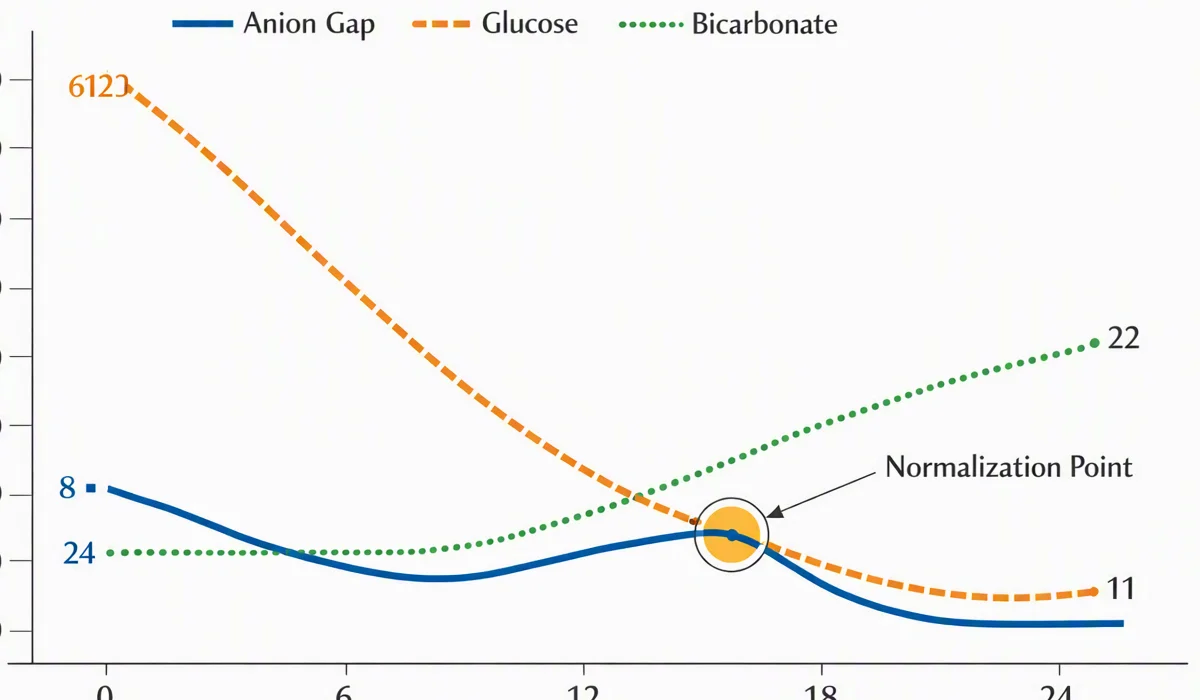
Finally, remember that electrolyte shifts are changing. Treatment, fluids, vomiting, renal losses, and ventilation changes can alter the acid-base picture over time. A single measurement gives only a snapshot, so follow-up assessment may be needed when the clinical state changes.
When to Use an Anion Gap Calculator in Practice
An anion gap calculator is particularly valuable when the overall findings suggests a metabolic disorder and you need rapid, precise analysis. It is especially helpful when reviewing blood gas analysis alongside the chemistry panel. The blend of pH, carbon dioxide, bicarbonate, and electrolytes gives a more complete assessment than either test alone.
Use the calculator when you have the core data from the chemistry panel, especially serum sodium, serum chloride, and bicarbonate. These values are the foundation of the anion gap formula and the delta gap calculation. If the result is unexpected, recheck whether the lab values are current and whether the specimen is reliable.
It is also useful in patients with significant acid-base disturbance where rapid interpretation matters. The calculator can help determine whether the patient likely has:
- High anion gap metabolic acidosis
- Non-anion gap metabolic acidosis
- A mixed acid-base disorder
- Concurrent metabolic alkalosis
Using the tool well requires attention to the full context of the electrolytes. If serum chloride is elevated, the patient may have a non-gap component. If bicarbonate is unexpectedly preserved, an alkalinizing process may be present. If albumin is low, the apparent gap may be misleadingly normal.
In other words, the calculator gives you the number, but interpretation gives you the diagnosis. That distinction is essential to good acid-base evaluation and more effective clinical decision-making.
FAQ: Delta Gap Interpretation
What does a delta gap tell you in acid-base interpretation?
Delta gap interpretation shows whether the rise in anion gap matches the fall in bicarbonate. It helps identify whether the patient has a simple disorder or a mixed acid-base disorder. This makes it a valuable part of acid-base evaluation and clinical decision-making.
How can you calculate delta gap from anion gap and bicarbonate?
Start by finding the anion gap using the anion gap formula: serum sodium minus serum chloride and bicarbonate. Then assess the change in anion gap with the change in bicarbonate to derive the delta ratio. An Anion Gap Calculator can speed up the calculation, but the interpretation still depends on the clinical context.
What does a normal delta gap suggest clinically?
A normal delta gap usually means the increase in anion gap is proportionate to the fall in bicarbonate. Clinically, that often suggests a single primary process such as high anion gap metabolic acidosis, with expected respiratory compensation. It does not rule out other problems, but it makes a mixed disorder less likely.
How should you interpret an elevated delta gap suggest?
An elevated delta gap suggests that the anion gap has increased more than bicarbonate has fallen. This often points to a concurrent metabolic alkalosis or another process that is masking the expected acid load. Conditions such as lactic acidosis and ketoacidosis can show this pattern when overlap is present.
Can hypoalbuminemia affect how you interpret the anion gap?
Yes. Hypoalbuminemia can lower the measured anion gap because albumin is a major unmeasured anion. That is why correction for hypoalbuminemia is important before interpretation. If albumin is low, the corrected anion gap may better reflect the true acid-base disorder and improve diagnostic accuracy.