Anion Gap Calculator with Albumin Correction
What Is the anion gap?
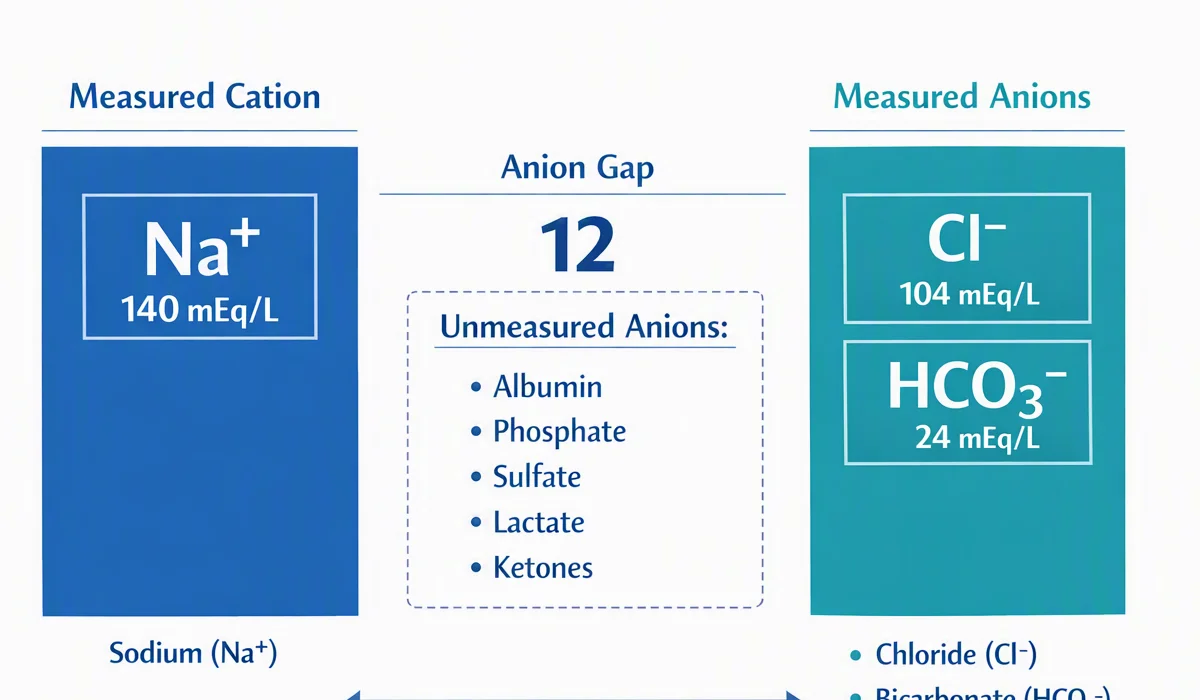
The anion-gap value is a computed result used to help interpret electrolyte levels and evaluate the body’s acid-base state. It compares the main measured positive ions, especially Na, with the measured negative ions, mainly chloride and bicarbonate. This basic laboratory calculation can reveal whether there are additional acids or other hidden anions affecting the body’s internal chemistry.
Clinically, the anion gap is a useful clinical aid for spotting an underlying metabolic disturbance. It is often reviewed as part of a more comprehensive electrolyte panel or serum chemistry assessment. Although the value is not a diagnosis by itself, it can point toward an acid-base imbalance that requires further investigation.
The basic idea is simple: if the difference between the measured cations and anions is higher than expected, the extra gap often reflects acids that are not directly measured on routine labs. That is why the anion gap plays a key role in interpretation of the anion gap and in evaluating metabolic acidosis.
Reasons Why Albumin Affects the Anion Gap
Albumin stands as one of the most important unmeasured anions in the blood. Since albumin carries a negative charge, it adds significantly to the usual gap seen on chemistry testing. When serum albumin is low, the anion gap may seem falsely low even if important acids are present.
Here hypoalbuminemia becomes clinically important. In people with low albumin, the measured anion gap can miss the severity of an acid-base problem. A patient may have significant retained acids, but the lab value can look deceptively normal because the negative charge from albumin has been reduced.
The explanation is related to protein charge. Albumin normally helps balance the electrical environment in plasma. If albumin drops, the body compensates in ways that can shift chloride and other ions, changing the appearance of the gap. That is why clinicians often use an albumin correction or an albumin-adjusted anion gap to improve diagnostic accuracy.
Using the correction helps with clinical utility because it makes the result more useful when evaluating a possible electrolyte imbalance or compensated acidosis. Overall, low albumin can hide the true acid burden, and correcting for it gives a clearer picture of the patient’s acid-base disorder.
Anion Gap Calculation and Albumin Correction
The typical anion gap formula is:
Anion gap = Sodium - (Chloride + Bicarbonate)
Some clinical laboratories may use minor variations, but this is the standard structure for a routine lab calculation. The result is then measured against a lab’s reference range to determine whether it is decreased, typical, or elevated.
To account for low albumin, clinicians use an albumin correction formula. A commonly used approach is to add about 2.5 mEq/L to the calculated gap for every 1 g/dL decrease in albumin below 4.0 g/dL. This creates a corrected anion gap that more accurately reflects the patient’s real acid burden.
Corrected anion gap = Measured anion gap + 2.5 × (4.0 - serum albumin in g/dL)
This correction factor is especially important in patients with low albumin, because the uncorrected value may seem closer to a normal anion gap even when extra acids are present. The goal is not to replace clinical judgment, but to improve interpretation.
With this adjustment, a hidden high anion gap metabolic acidosis may become simpler to detect. The corrected value can also help separate true abnormal acid accumulation from a value that only appears normal because albumin is reduced.
How to Use Anion Gap Calculator
An anion gap calculator streamlines the task by combining the key lab values into one result. To operate it, enter the relevant values from the electrolyte panel:
- Sodium level
- Blood chloride
- Blood bicarbonate
- Blood albumin
The calculator first performs the standard lab calculation for the anion gap. Then it uses albumin correction to produce the corrected anion gap. This helps to calculate anion gap values quickly while also factoring in serum albumin abnormalities.
In practical use, the calculator supports faster interpretation of serum electrolytes and helps clinicians decide whether the pattern suggests a metabolic acidosis. It is especially useful in cases where the acid-base picture is complex, the patient has significant illness, or the laboratory data indicate mixed disorders.
For example, a patient with low bicarbonate and low albumin may still have a more significant acid burden than the raw anion gap suggests. By using the calculator, the clinician can better assess acid-base status and determine whether the problem is more consistent with elevated unmeasured acids.
Reading High versus Normal Anion Gap Results
A high anion gap metabolic acidosis usually means that extra acids are present in the bloodstream. These acids increase the gap because they are not directly measured on routine chemistry testing. Typical causes include lactic acidosis, ketone-driven acidosis, renal impairment, and toxic ingestions.
In contrast, a anion gap–normal metabolic acidosis is typically associated with loss of bicarbonate or failure to excrete acid without a marked rise in unmeasured acids. Because the uncorrected value may appear normal in the setting of hypoalbuminemia, albumin adjustment is important before concluding that the acid-base picture is truly normal.
Lactic acid accumulation occurs when lactate rises, often due to tissue hypoperfusion, severe illness, or impaired metabolism. Ketone-related acidosis occurs when ketone bodies accumulate, such as in diabetes, starvation, or alcohol-related states. Both create a true elevation in the gap and require prompt evaluation.
The result must be interpreted in context. A corrected value that shifts from normal to elevated may revise the entire diagnostic approach. That is the value of anion gap interpretation: it helps clinicians identify whether the acid-base pattern is likely due to excess acids, bicarbonate loss, or a mixed disorder.
Typical Causes of Elevated Anion Gap
A number of conditions can elevate the anion gap. A primary reason is renal failure, which reduces the body’s ability to clear acid. As kidney function worsens, acids build up and the gap may rise. Related to this is uremia, where retained waste products and acid retention lead to the abnormal value.
Another important category is toxic alcohols, including substances that produce acid metabolites after ingestion. These can trigger dangerous high-gap acidosis and require urgent recognition. The presence of a high gap in the right clinical setting may help refine the differential diagnosis quickly.
Lactate is also a key contributor. Elevated lactate may result from shock, infection, hypoxia, seizures, or other conditions that promote anaerobic metabolism. Since lactate is an unmeasured anion on standard panels, it can raise the measured gap markedly.
Additional causes of abnormal values include ketone accumulation, medication effects, and other forms of retained acids. The final interpretation should always link the lab pattern to the clinical presentation. In other words, the anion gap is a tool for reasoning through the source of the metabolic acidosis, not a complete answer.
Constraints and Practice Considerations
Although the anion gap is useful, it has important limitations. A result can be affected by measurement error in the related electrolyte panel, especially if sodium, chloride, or bicarbonate values are inaccurate. Subtle lab differences can alter the resulting calculation more than clinicians realize.
Interpreting the result also hinges on the lab’s reference range. Various laboratories use different methods and calibration standards, so the “normal” value may differ. A result that looks abnormal in one setting may fall within the expected range in another.
The anion gap should also be interpreted alongside other data, including the arterial blood gas when available. The blood gas helps define pH, respiratory compensation, and whether the patient has a mixed acid-base pattern. When paired with the chemistry panel, it gives a clearer view of the patient’s acid-base status.
Ultimately, a corrected value strengthens interpretation but does not replace bedside assessment. Clinical context, medications, kidney function, perfusion, and symptoms all play a role. The best use of the calculator is as a diagnostic aid that supplements, rather than takes the place of, medical reasoning.
Frequently Asked Questions

What is an anion gap calculator with albumin correction?
An anion gap calculator with albumin correction is a utility that determines https://anion-gap-chart421.talesignal.com/posts/can-paraproteinemia-reduce-the-anion-gap the standard anion gap and then modifies it for serum albumin values. This assists produce a more accurate corrected anion gap, especially when albumin is low and the uncorrected value may underestimate the true acid burden. It is commonly used as a diagnostic aid in evaluating metabolic acidosis.
Why do you correct the anion gap for albumin?
You correct the anion gap for albumin because albumin is a major unmeasured anions contributor in blood. In hypoalbuminemia, the raw anion gap can appear lower than expected, which may hide a significant acid-base problem. Albumin correction improves clinical interpretation and helps reveal true anion gap interpretation more accurately.
How do you calculate the corrected anion gap?
First, use the anion gap formula: sodium minus the sum of chloride and bicarbonate. Then apply the albumin correction formula by adding about 2.5 mEq/L for each 1 g/dL that serum albumin is below 4.0 g/dL. This yields the corrected anion gap and helps account for low albumin when you evaluate the result.
What does a high anion gap mean?
A high anion gap usually suggests high anion gap metabolic acidosis, which means there are extra acids in the blood that are not directly measured on routine labs. Common causes include lactic acidosis, ketoacidosis, renal failure, uremia, and toxic alcohols. The result should be interpreted with the electrolyte panel, symptoms, and other clinical data.
Could a normal anion gap still indicate acid-base acidosis?
Certainly. A normal-gap metabolic acidosis can indeed be present, especially if bicarbonate is low but the gap remains within the reference range. In addition, reduced albumin can lead a true high-gap acidosis appear normal unless you use albumin correction. This is why the corrected value and overall clinical utility of the calculator are so important for accurate metabolic acidosis assessment.